
Backorder
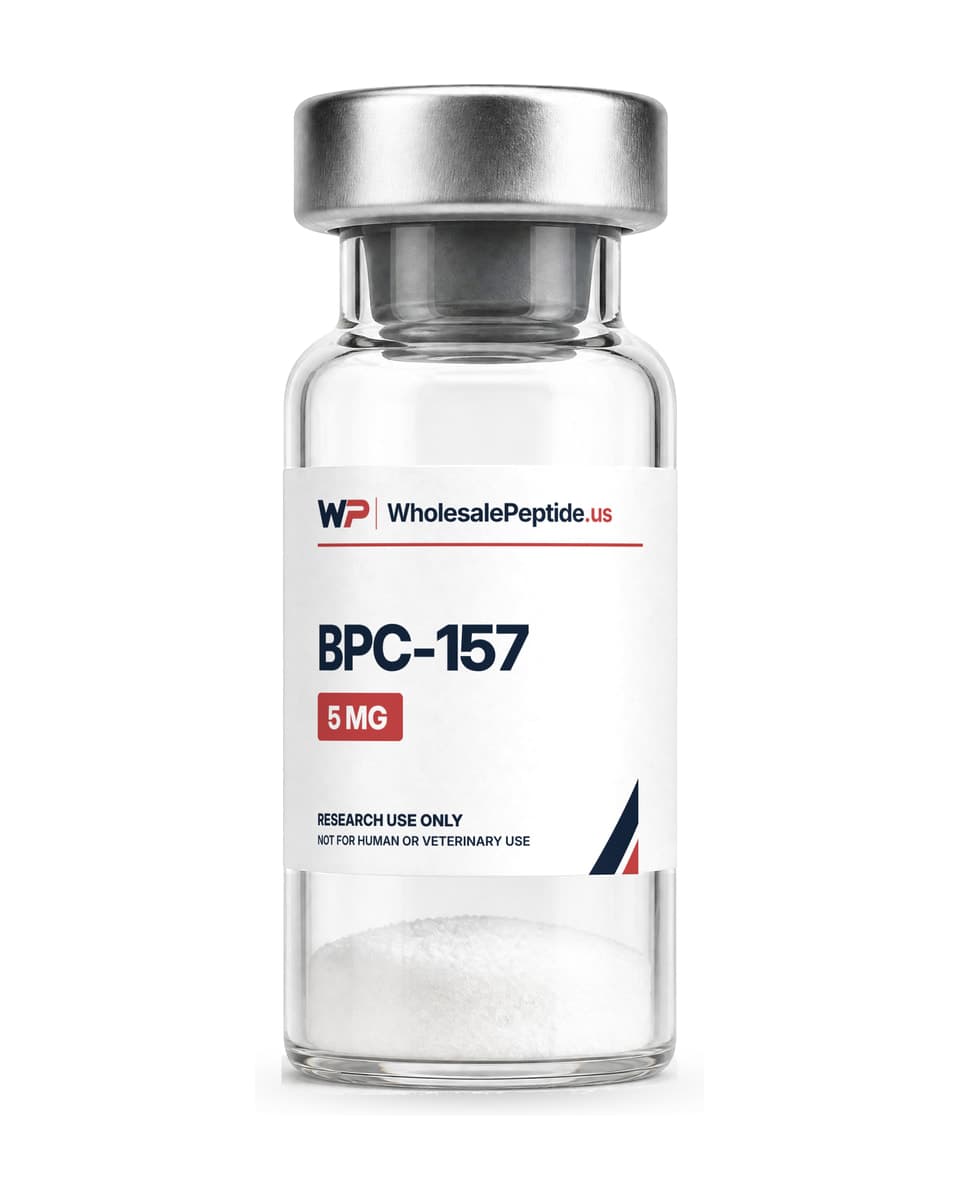
BPC-157
Tissue-repair research peptides
5 mg · 10 mg
From
$27.00 / vial
Research use only
For laboratory research use only. Not for human or veterinary use.
Paid by 2:00 PM ET Monday–Friday ships the same day · Free U.S. shipping over $500
KPV (CAS 67727-97-3, C16H30N4O4, 342.4 g/mol) is supplied by WholesalePeptide.us in 10-vial kits of 10 mg lyophilized powder. Every lot is tested by an independent third-party laboratory (RP-HPLC purity and LC-MS identity); A lot-specific Certificate of Analysis is published before the lot ships. List price for 10 mg is $320.00 per kit ($32.00 per vial), with discounts at 3, 10 and 50 kits and a quote from 100 kits. Minimum order is one kit. Research use only; not for human or veterinary use.
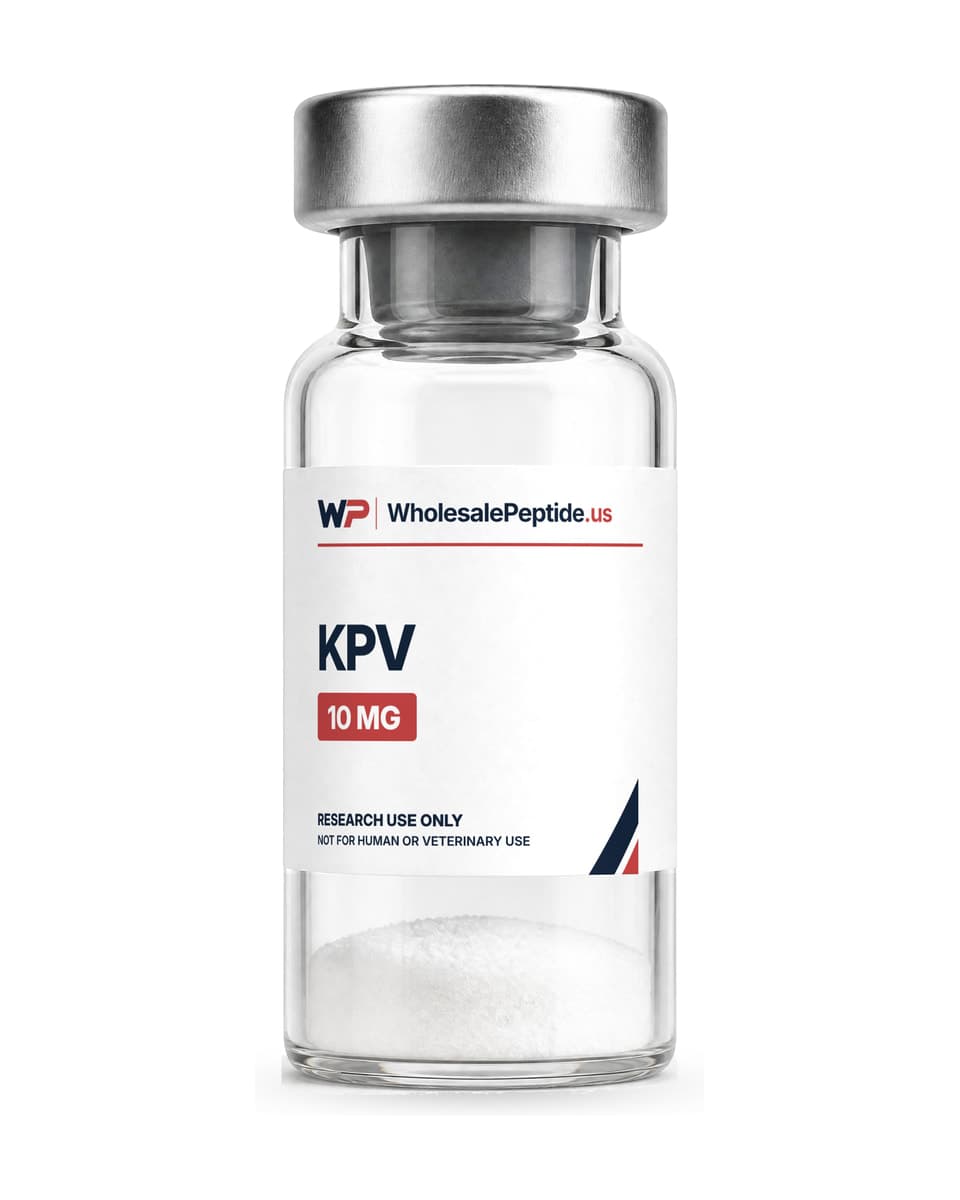
Illustrative product image. The label on each physical vial carries its lot code.
The discount is set by the total kits in your order across all compounds. Per-vial price = kit price ÷ 10.
| SKU | Strength | 1–2 kits | 3–9 kits | 10–49 kits | 50–99 kits | 100+ kits |
|---|---|---|---|---|---|---|
| WP-KPV-10 | 10 mg × 10 | $320.00 $32.00 / vial | $304.00 $30.40 / vial | $288.00 $28.80 / vial | $272.00 $27.20 / vial | Quote |
Compare every SKU on the wholesale price list.
Certificate of Analysis — current lot
A lot-specific Certificate of Analysis is published before the lot ships. Lot record and lab report from an independent third-party laboratory will appear here.
All certificates: COA library · how to read a peptide COA · testing and quality · HPLC vs mass spec · storing lyophilized peptides
KPV is the tripeptide Lys-Pro-Val, corresponding to residues 11–13 at the C-terminus of alpha-melanocyte-stimulating hormone (α-MSH).
| Also known as | lysine-proline-valine (α-MSH 11-13) |
|---|---|
| Class | α-MSH C-terminal tripeptide (α-MSH 11-13) |
| CAS number | 67727-97-3 |
| Molecular formula | C16H30N4O4 |
| Molar mass | 342.43 g/mol |
| Length | 3 amino acids |
| Sequence | Lys-Pro-Val (KPV) |
| Registry record | PubChem CID 125672 |
| U.S. status | Not approved by the FDA |
| Supplied as | 10 mg per vial · 10 vials per kit · lyophilized powder, single compound, single strength · 99%+ purity (RP-HPLC) |
WholesalePeptide.us is a U.S. KPV supplier and vendor for laboratories, distributors and research resellers. Kits ship from Sheridan, WY by UPS / USPS, tracked; orders paid by 2:00 PM ET Monday–Friday leave the same day, typical transit is 1–4 business days, and orders over $500 ship free. Every kit label carries the lot code that matches its certificate from an independent third-party laboratory. For KPV in quantities of 100+ kits, request a bulk quote; for your own label see private label peptides.
KPV is the C-terminal tripeptide of alpha-melanocyte-stimulating hormone, the Lys-Pro-Val sequence that closes the 13-residue hormone cleaved from pro-opiomelanocortin. It is indexed under the synonyms Lys-Pro-Val, α-MSH(11–13) and, in PubChem, MSH (11-13). Structure–activity work on α-MSH separated the hormone's pigmentary pharmacophore — the His-Phe-Arg-Trp core that drives melanocortin-1 receptor signaling — from anti-inflammatory activity that survived in the much smaller C-terminal fragment. That separation is what made KPV useful at the bench: a three-residue, synthetically trivial molecule that reproduces part of the parent hormone's signaling profile in cell and rodent models without the receptor coverage of the full hormone.
The molecule has no modifications — free N-terminal lysine, free C-terminal valine, a central proline. Its design interest lies in what the proline does. The Lys-Pro bond and the rigid pyrrolidine ring make the tripeptide a substrate for proton-coupled oligopeptide transporters rather than a passive diffuser, and the single basic side chain gives it a net positive charge at neutral pH. Both features shape how it behaves in uptake and permeability experiments.
The best-characterized molecular target is not a melanocortin receptor at all. Work published in Gastroenterology in 2008 used radiolabeled KPV and competition against a known PepT1 substrate to show that the tripeptide enters intestinal epithelial lines (Caco2-BBE, HT29-Cl.19A) and Jurkat T cells through the peptide transporter PepT1 (SLC15A1), and that nanomolar concentrations suppress NF-κB and MAP-kinase activation and pro-inflammatory cytokine release in those cells. A parallel murine study published in Inflammatory Bowel Diseases the same year reported activity in DSS and CD45RB-transfer colitis models that persisted in animals carrying a non-functional melanocortin-1 receptor, which is the basis for describing part of its activity as MC1R-independent.
As a research tool KPV therefore appears in three recurring assay families: NF-κB luciferase reporter and phospho-protein readouts in epithelial and immune cell lines; transporter studies that use it as a model PepT1 substrate alongside Gly-Sar; and cytokine panels by qRT-PCR and ELISA in rodent colitis models. Because it is small, water-soluble and cheap to synthesize, it is also a standard payload in delivery-system research — hyaluronic-acid-functionalized polymeric nanoparticles and chitosan/alginate hydrogels have both been characterized with KPV as the encapsulated model peptide in murine colitis work published in 2017.
Regulatory position, stated factually: KPV is not an FDA-approved drug and is not the active ingredient of any approved product. FDA lists KPV among bulk drug substances that were nominated for compounding and then withdrawn by the nominators, and KPV-related bulk substances were discussed at the Pharmacy Compounding Advisory Committee meeting of July 23–24, 2026. On October 30, 2026 the Department of Health and Human Services published a notice in the Federal Register announcing an interim enforcement-discretion policy for certain peptide bulk substances used in 503A compounding while the 503A bulks list is developed through rulemaking; that policy is addressed to state-licensed pharmacies and physicians, is not an approval, and does not alter the research-use status of the material sold here.
For analytical labs, KPV's low molar mass makes LC-MS identity confirmation simple, but it also means small mass differences from counter-ions such as TFA or acetate matter when reporting net peptide content. Each lot's COA states purity and identity separately.
U.S. regulatory status of the compound (as an active ingredient): Not approved by the FDA. The material sold here is a research reference chemical, not a drug product.
The CAS number of KPV is 67727-97-3. Its molecular formula is C16H30N4O4 and its average molar mass is about 342.4 g/mol. PubChem CID: 125672.
KPV has an average molar mass of about 342.4 g/mol (342.4 Da). On a lot COA, LC-MS should report an observed mass that agrees with this within the lab's tolerance.
KPV is a 3-residue peptide. Sequence: Lys-Pro-Val (KPV).
Yes. KPV is sold in 10-vial kits with a minimum order of one kit. Published price breaks apply at 3, 10 and 50 kits, and orders of 100+ kits are quoted within one business day. See wholesale pricing. All material is supplied for laboratory research use only.
Every KPV lot is released at 99%+ purity by RP-HPLC, with identity confirmed by LC-MS, tested by an independent third-party laboratory. A lot-specific Certificate of Analysis is published before the lot ships. The lot code on each vial matches its certificate in the COA library.
No. KPV is not an FDA-approved drug and is not the active ingredient of any approved product. It appears in the literature as a preclinical research peptide. WholesalePeptide.us supplies it as a research reference material only; For laboratory research use only. Not for human or veterinary use.
KPV ships as lyophilized powder in sealed vials via UPS / USPS, tracked. Orders paid by 2:00 PM ET Monday–Friday are dispatched the same day. We ship to U.S. addresses only. Details are on the shipping page.
No. The HHS notice published in the Federal Register on October 30, 2026 describes interim enforcement discretion for state-licensed pharmacies and physicians compounding under section 503A while FDA develops the 503A bulks list by rulemaking. It is not an approval and it does not apply to research reference material. WholesalePeptide.us supplies KPV for laboratory research only; For laboratory research use only. Not for human or veterinary use.
Tissue-repair research peptides
5 mg · 10 mg
Research use only
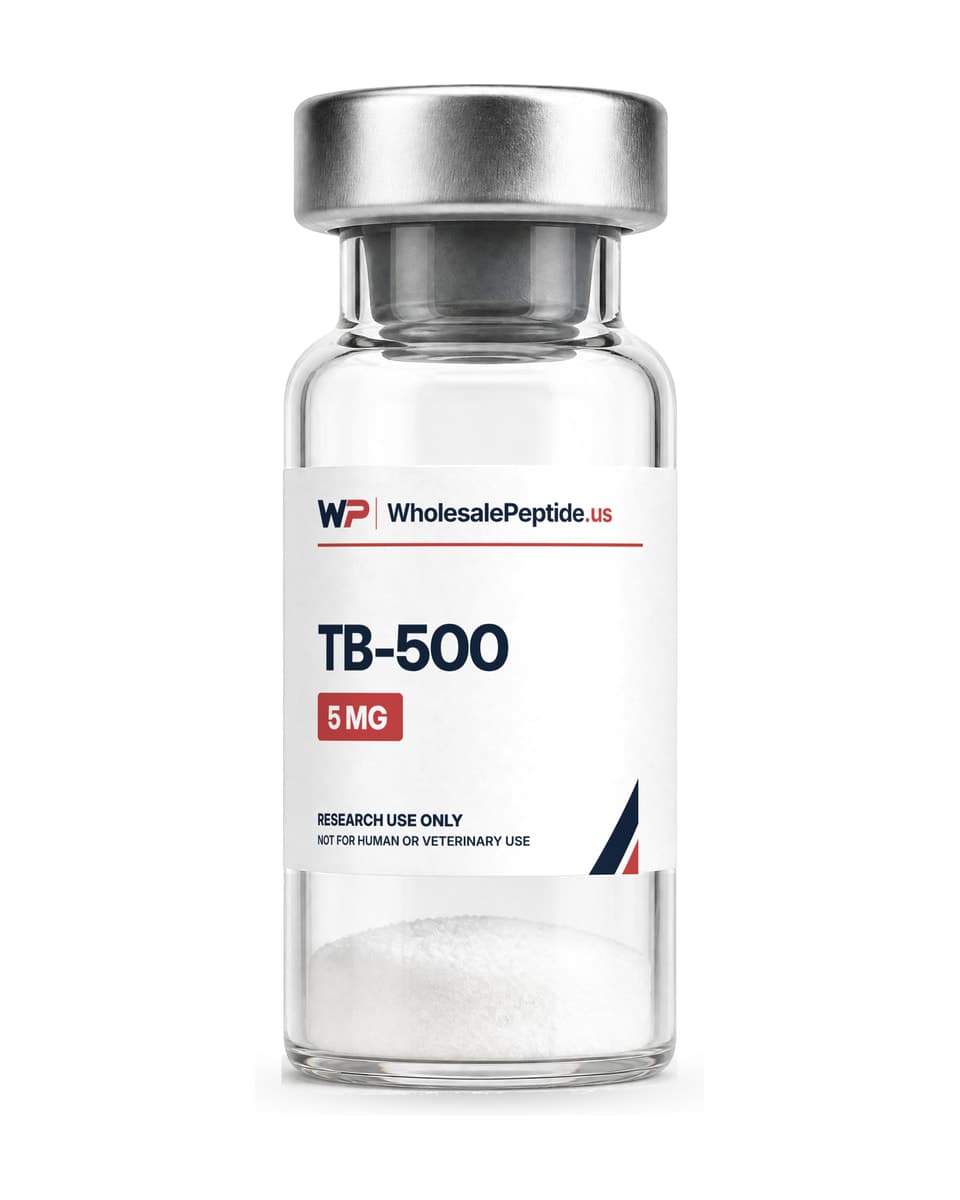
Tissue-repair research peptides
5 mg · 10 mg
Research use only
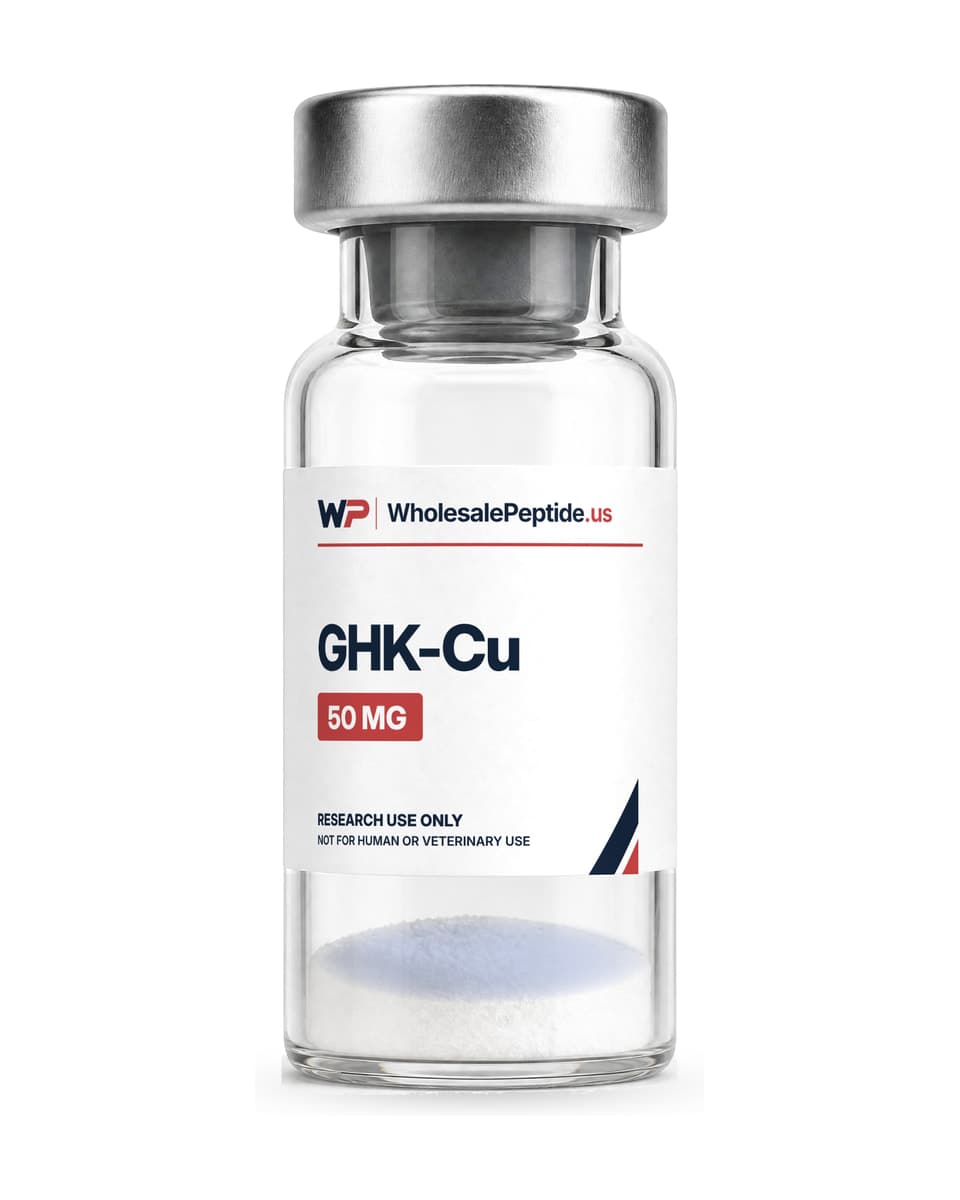
Tissue-repair research peptides
50 mg · 100 mg
Research use only
Back to wholesale peptides · full catalog · pricing
For laboratory research use only. Not for human or veterinary use.
For laboratory research use only. Not for human or veterinary use. By continuing you confirm you are buying for laboratory research.