
Backorder
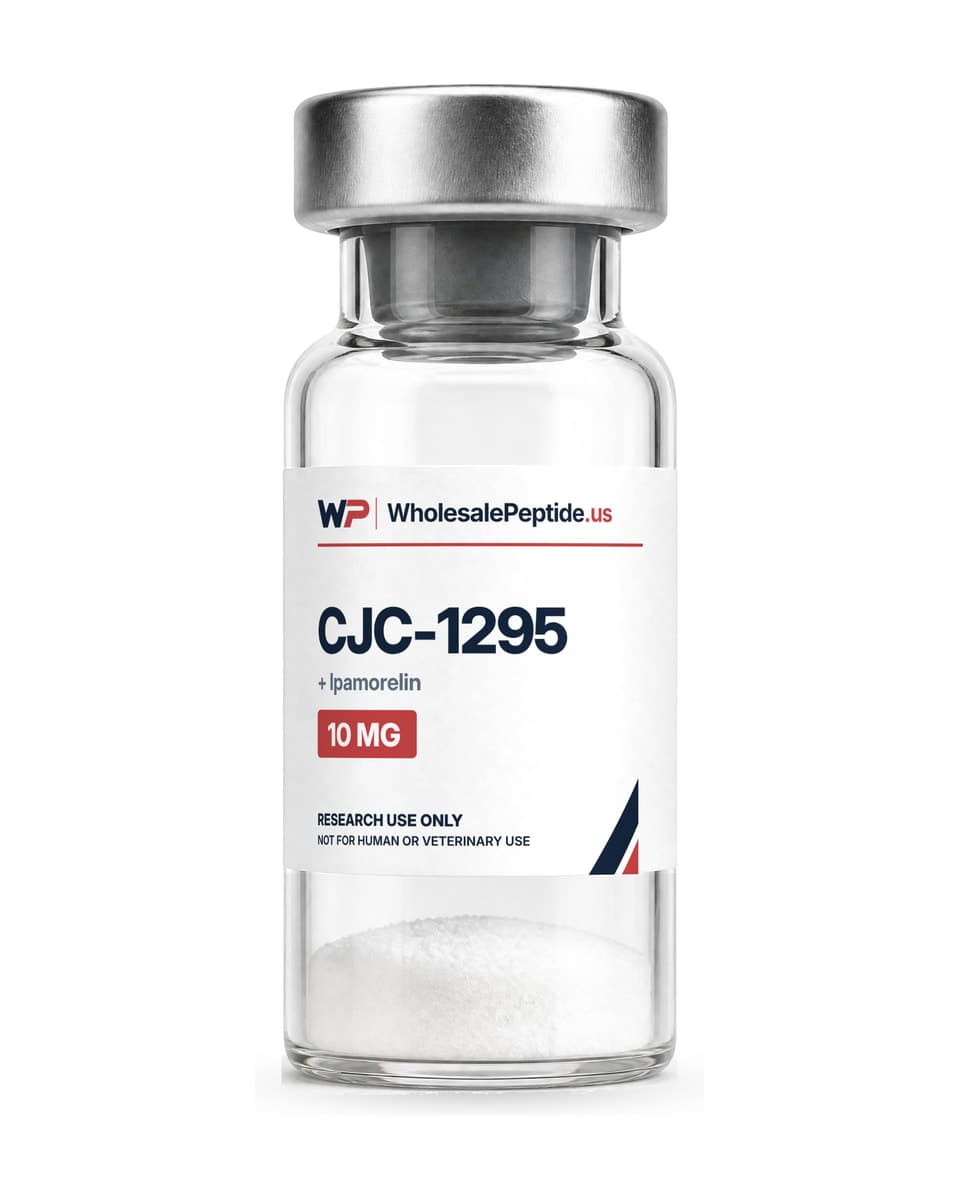
For laboratory research use only. Not for human or veterinary use.
Paid by 2:00 PM ET Monday–Friday ships the same day · Free U.S. shipping over $500
BPC-157 / TB-500 Blend is supplied by WholesalePeptide.us in 10-vial kits of 10 mg lyophilized powder. Every lot is tested by an independent third-party laboratory (RP-HPLC purity and LC-MS identity); A lot-specific Certificate of Analysis is published before the lot ships. List price for 10 mg is $345.00 per kit ($34.50 per vial), with discounts at 3, 10 and 50 kits and a quote from 100 kits. Minimum order is one kit. Research use only; not for human or veterinary use.
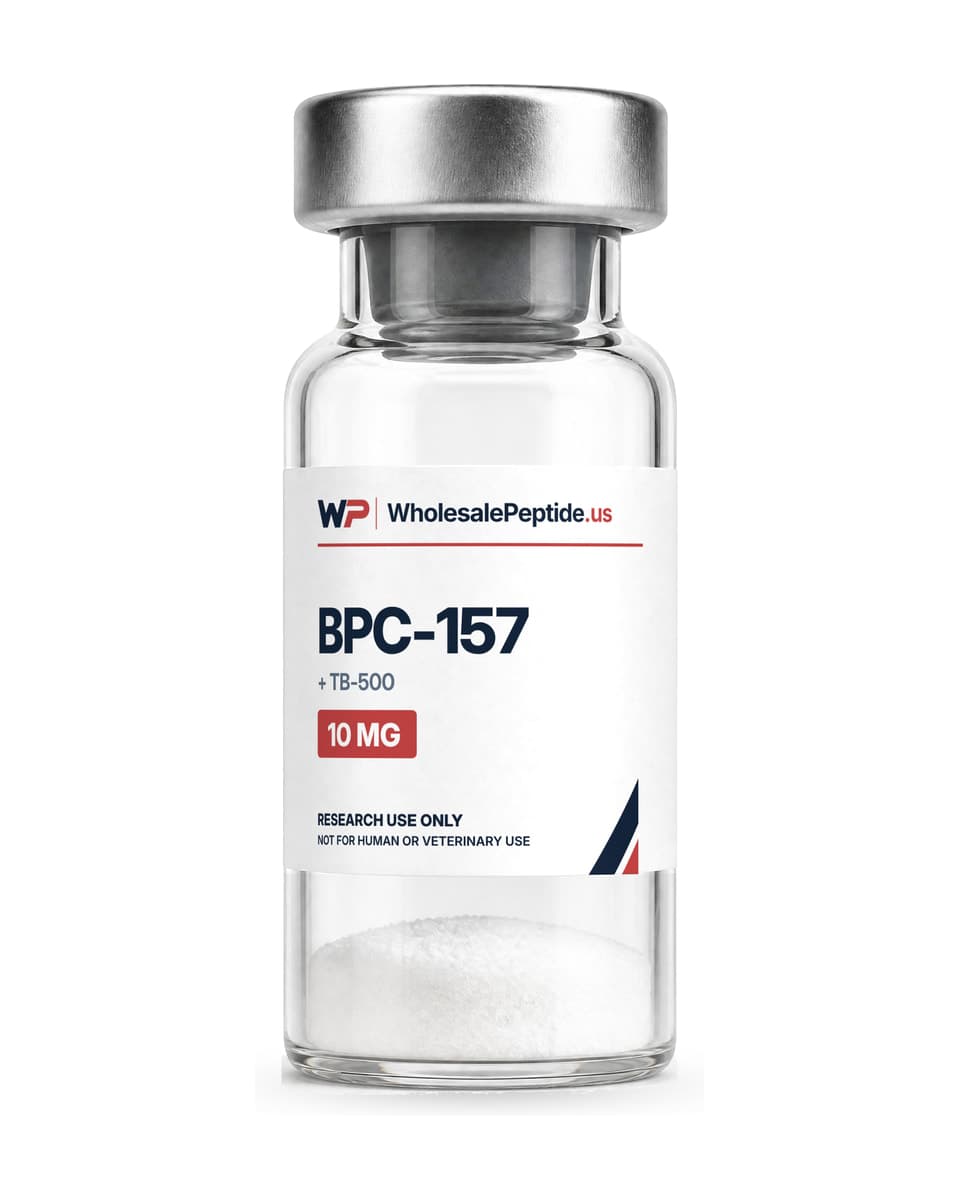
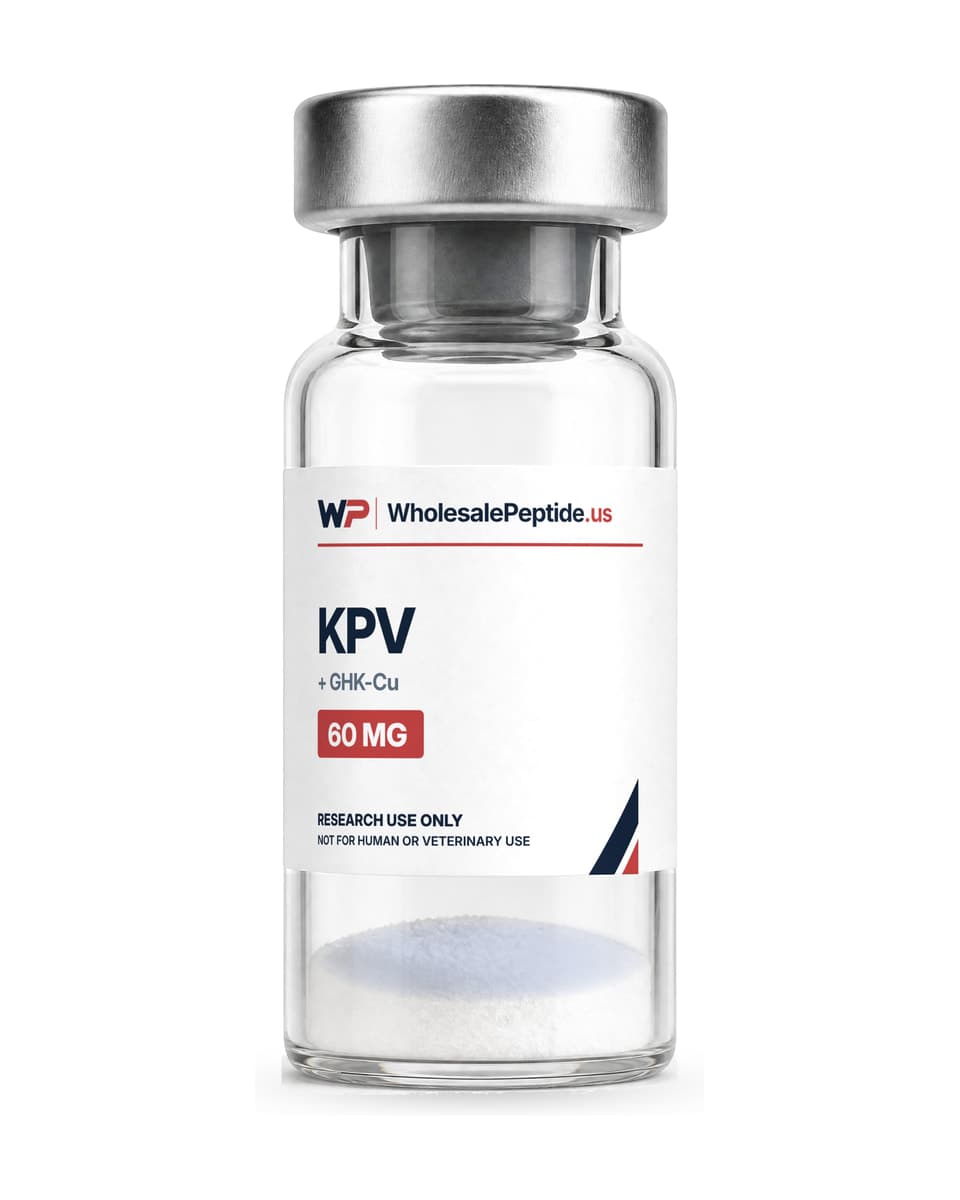
Illustrative product image. The label on each physical vial carries its lot code.
The discount is set by the total kits in your order across all compounds. Per-vial price = kit price ÷ 10.
| SKU | Strength | 1–2 kits | 3–9 kits | 10–49 kits | 50–99 kits | 100+ kits |
|---|---|---|---|---|---|---|
| WP-BPCTB-10 | 10 mg × 10 | $345.00 $34.50 / vial | $327.75 $32.78 / vial | $310.50 $31.05 / vial | $293.25 $29.33 / vial | Quote |
Compare every SKU on the wholesale price list.
Certificate of Analysis — current lot
A lot-specific Certificate of Analysis is published before the lot ships. Lot record and lab report from an independent third-party laboratory will appear here.
All certificates: COA library · how to read a peptide COA · testing and quality · HPLC vs mass spec · storing lyophilized peptides
The BPC-157 / TB-500 blend is a multi-compound lyophilized research blend containing BPC-157 and TB-500 in a fixed ratio in a single vial.
| Class | Fixed-ratio research blend |
|---|---|
| Components | BPC-157, TB-500 (Thymosin β-4 fragment) |
| Supplied as | 10 mg per vial · 10 vials per kit · lyophilized powder, fixed-ratio blend, one strength per kit · 99%+ purity (RP-HPLC) |
| Component | CAS | Formula | Molar mass |
|---|---|---|---|
| BPC-157 | 137525-51-0 | C62H98N16O22 | 1,419.5 g/mol |
| TB-500 (Thymosin β-4 fragment) | 885340-08-9 | C38H68N10O14 | 889 g/mol |
WholesalePeptide.us is a U.S. BPC-157 / TB-500 Blend supplier and vendor for laboratories, distributors and research resellers. Kits ship from Sheridan, WY by UPS / USPS, tracked; orders paid by 2:00 PM ET Monday–Friday leave the same day, typical transit is 1–4 business days, and orders over $500 ship free. Every kit label carries the lot code that matches its certificate from an independent third-party laboratory. For BPC-157 / TB-500 Blend in quantities of 100+ kits, request a bulk quote; for your own label see private label peptides.
This product combines two of the most frequently paired peptides in tissue-repair research in one lyophilized vial: BPC-157, a synthetic 15-residue peptide based on a sequence from a gastric-juice protein, and TB-500, the N-terminally acetylated Ac-Leu-Lys-Lys-Thr-Glu-Thr-Gln heptapeptide corresponding to residues 17–23 of thymosin beta-4, the actin-binding region of that 43-residue protein.
The reason the two are studied side by side is that their reported mechanisms are different but converge on the same experimental endpoints. The BPC-157 literature centres on vascular and fibroblast biology — nitric-oxide-dependent vasomotor responses in isolated rat aorta, VEGFR2 upregulation in endothelial models, and FAK/paxillin phosphorylation in cultured tendon fibroblasts. The TB-500 fragment is studied as the actin-sequestering motif of thymosin beta-4, where the full protein's activity in cell migration and angiogenesis models is attributed in part to this short sequence; a 2003 mouse study in Wound Repair and Regeneration compared the full protein with a seven-residue actin-binding-domain peptide in dermal wound-closure models, and a 2010 analysis in the FASEB Journal mapped several distinct active sites across thymosin beta-4, only one of which the fragment carries. Comparative and combination designs in cell and tissue models are therefore the normal way these two are used; a 2026 rat Achilles-tendon study in Joint Diseases and Related Surgery ran exactly that design and reported that the combined condition produced no additional change over either peptide alone, which the authors attributed to convergence on shared downstream pathways. Whether a blend or two separate vials is the right choice depends on whether your design needs that comparison or a fixed ratio.
Pre-blended material has three practical advantages. The ratio is fixed at manufacture, so it does not vary from one bench preparation to the next. Each vial needs one reconstitution instead of two, which reduces handling and the chance of error. And one lot COA covers the entire contents: identity is confirmed by LC-MS for each component, and RP-HPLC purity is reported for each component, so both molecules are documented together.
What to check on the certificate, component by component. For BPC-157: the LC-MS mass against the 15-residue sequence, and RP-HPLC purity reported for that peak rather than as a blend total. For TB-500: the mass against the acetylated 17–23 fragment specifically — material sold under the TB-500 name is sometimes the full-length 43-residue protein or a different fragment, and the acetyl group adds 42 Da, so the identity line is the only way to tell. Then, for both: the counter-ion and net peptide content, since salt form changes mass per milligram and therefore the real ratio in the vial, and the stated component amounts, which should match the label.
Regulatory position, stated factually: neither component is an FDA-approved drug, and this blend is not a drug product. FDA lists BPC-157 and the thymosin beta-4 17–23 fragment among bulk drug substances nominated for compounding and then withdrawn by the nominators; both were discussed at the Pharmacy Compounding Advisory Committee meeting of July 23–24, 2026, and the HHS interim enforcement-discretion notice published in the Federal Register on October 30, 2026 addresses certain peptide bulk substances in 503A compounding pending rulemaking. None of that is an approval, and it is addressed to licensed compounders rather than research suppliers. Component amounts are listed on the product label and on the lot COA. WholesalePeptide.us supplies this blend as a research reference material for in-vitro, analytical and preclinical laboratory research.
If your design needs a ratio other than the fixed blend, or needs each peptide alone as a comparator, buy the single-compound kits (BPC-157, TB-500) and combine them in your lab.
Yes. the BPC-157 / TB-500 blend is sold in 10-vial kits with a minimum order of one kit. Published price breaks apply at 3, 10 and 50 kits, and orders of 100+ kits are quoted within one business day. See wholesale pricing. All material is supplied for laboratory research use only.
Each lot COA from an independent third-party laboratory lists LC-MS identity for both BPC-157 and TB-500 and RP-HPLC purity for each component. Each component is released at 99%+. A lot-specific Certificate of Analysis is published before the lot ships. See the COA library.
No. Neither component is an FDA-approved drug, and the blend is not a drug product. WholesalePeptide.us sells it as a research reference material only; For laboratory research use only. Not for human or veterinary use.
The BPC-157 / TB-500 blend ships as lyophilized powder in sealed vials via UPS / USPS, tracked. Orders paid by 2:00 PM ET Monday–Friday are dispatched the same day. We ship to U.S. addresses only. Details are on the shipping page.
If your design needs the two peptides together at one fixed ratio, the blend removes a weighing step and documents both components under one lot code. If it needs each peptide alone as a comparator, or a ratio other than the fixed one, order BPC-157 and TB-500 separately. Published rodent work has run both designs. For laboratory research use only. Not for human or veterinary use.
Research blends
70 mg
Research use only
Research blends
80 mg
Research use only
Back to wholesale peptides · full catalog · pricing
For laboratory research use only. Not for human or veterinary use.
For laboratory research use only. Not for human or veterinary use. By continuing you confirm you are buying for laboratory research.